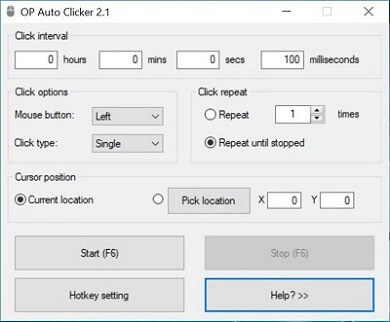
Automate mouse clicks |
 |
|
|
Automate mouse clicks |
|
|
|
by Charles Vincent Jones remains one of the most foundational and mathematically rigorous texts in the field of electromechanical energy conversion. First published in 1967 by Butterworths, this seminal work introduced a cohesive mathematical framework that bridged the gap between disparate machine topologies, including DC machines, induction motors, and synchronous alternators. By treating all rotating machines as variations of a single "primitive" generalized model, C.V. Jones revolutionized how engineers model transient states, dynamic performance, and matrix-based power transformations.
Let’s address the elephant in the room. The search query is trending. What does "new" mean for a book published in the 1960s (generally regarded as the major 1967 Pergamon Press edition)? by Charles Vincent Jones remains one of the
Decades after its original publication, C.V. Jones's book remains highly sought after by postgraduate students, researchers, and control systems engineers. Modern Applications in Power Electronics and EV Design What does "new" mean for a book published
For researchers, students, and practicing power electronics engineers searching for , this comprehensive overview explores the core engineering principles, mathematical transformations, and the enduring relevance of Jones’ unified framework in the modern era of electric vehicles (EVs) and smart grids. Core Principles of the Unified Theory No. In fact
Transforming balanced and unbalanced AC systems into the unified framework to predict stall torque, pull-out torque, and short-circuit transients. Why Engineers and Academics Search for the PDF
You might wonder: Isn't this old theory obsolete? No. In fact, it is the foundation of and AI-driven motor tuning .