 |
|
|
 |
||
|
|
|
|
||
English pages about Rahan, great french comics.
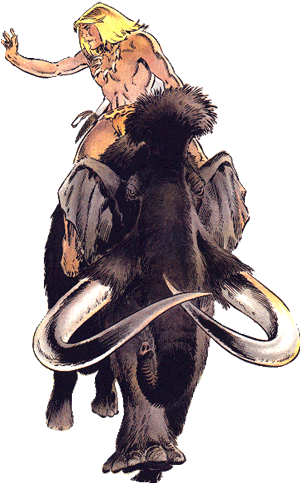 |
Created by Roger Lecureux and Andre Cheret, Rahan is a comics caractere published in Pif Gadget Magazin for the first time, about 1969. Rahan is a hero of more 180 stories, short (11 pages) or great (about 40 pages) all stories is now in 24 books (only in french version for the moment) more 3500 pages in total. Adapted in cartoon for TV (26x 26 minutes) only in french to. Rahan is very popular in France,he is a classical comics. Just now Rahan have a lot of news, new stories from a new editor and any product about this hero: Toys, pictures, statuette, expose ... and some projects: films and new cartoons ... If you have a editing in a no french language, please contact me with message or an . |
 |
|
|
|
||
 |
|
||||
|
|
||||
 |
|
||||
|
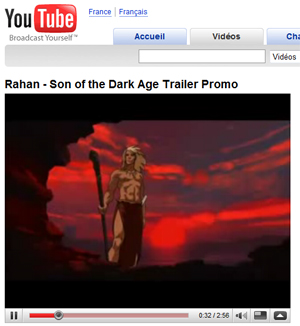
All in lot of news : Statuette, exposition, cartoons in video ... (in french) |
 |
New cartoon, by Xilam at the TV in 2009, on France 3 for France see on Xilam web site |
In this context, La venganza de la cortesana diverged from both telenovela moralism (where the fallen woman dies or repents) and art-cinema exoticism (e.g., Belle de Jour ). Instead, it aligned with the Chilean film La nana (2009) and the Colombian La sociedad del semáforo (2010) in exploring classed femininity—but added a vengeance plot usually reserved for male antiheroes.
(originally released in German as Die Rache der Wanderhure , and widely known in Spanish-speaking regions as both La venganza de la ramera errante and La venganza de la cortesana errante ) is a prominent 2012 historical drama television film . Directed by Hansjörg Thurn , the production serves as the high-stakes second installment of the critically acclaimed Die Wanderhure trilogy. The cinematic work is based directly on the best-selling historical fiction novels written by the literary duo under the pseudonym Iny Lorentz . la venganza de la cortesana 2012 work
La venganza de la cortesana (2012), a lesser-studied Spanish-language independent production, reconfigures the classic courtesan narrative through a postfeminist lens of structural revenge. Unlike traditional femme fatale stories where the courtesan meets a tragic end, this work presents a calculated, systemic vengeance against a patriarchal power structure. This paper analyzes the film/play as a critique of early 21st-century gender dynamics in Latin America or Spain, focusing on narrative structure, visual symbolism, and the ethical ambiguity of revenge. We argue that the 2012 piece anticipates the #MeToo movement by illustrating how institutional betrayal transforms the courtesan from an object of desire into a subject of historical reckoning. In this context, La venganza de la cortesana
|
Last
update : November 2008
|
About this web site in french |
|
|
|
|
|